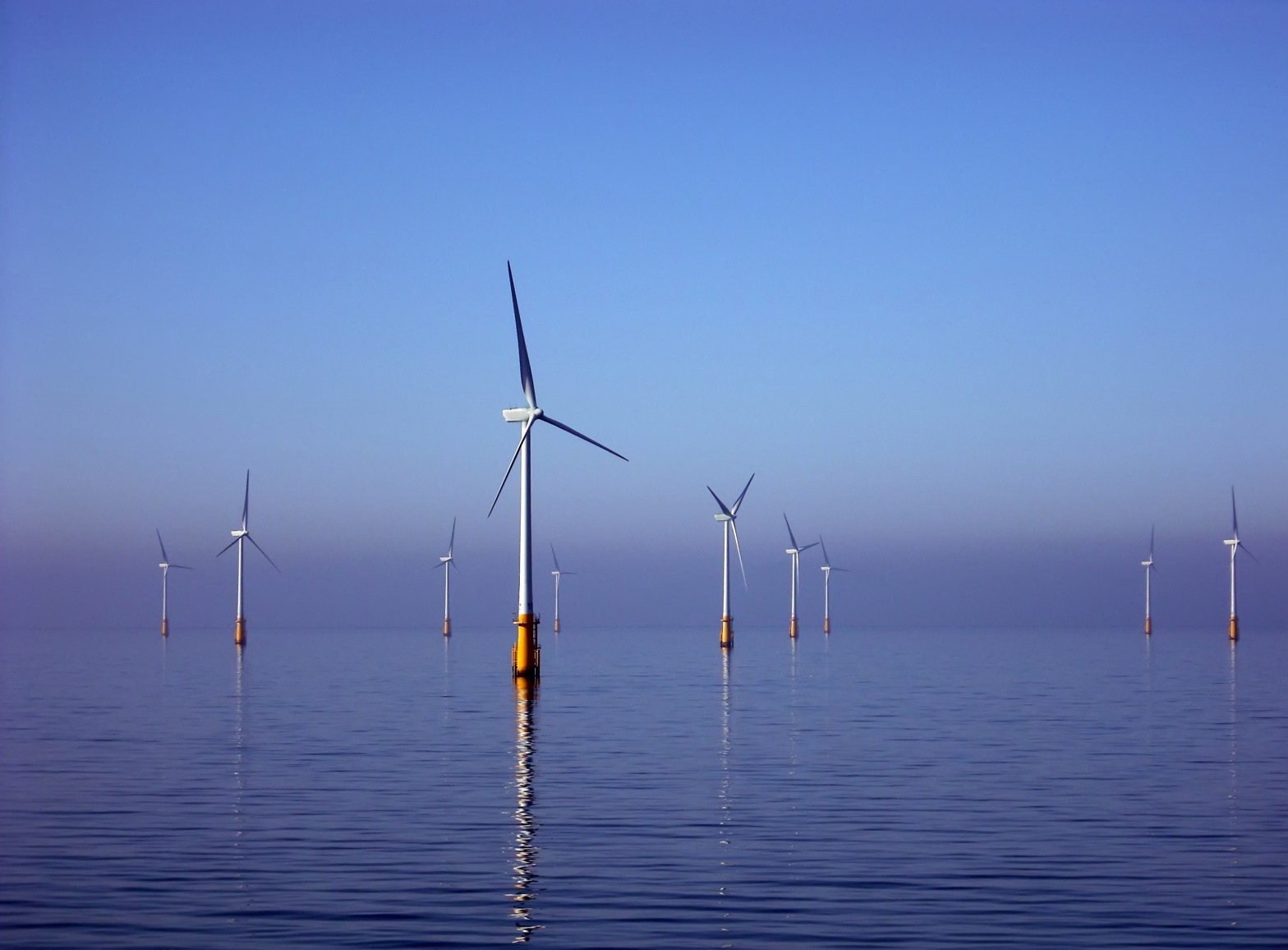
With less fanfare than they hoped (Brexit still sucking the political oxygen from the room), Labour have launched a new policy called the “People’s Power Plan” promising a radically new model for delivering renewable energy. There isn’t a detailed policy at the time of writing so only the outline headlines are available, and what headlines they are:
· up to 37 new offshore wind farms bringing the total to 52GW of power by 2030
· 51% Government ownership of these new wind farms
· 20% of the profits from the public ownership being used to invest in left behind coastal towns
These targets raise many questions – the success or otherwise of this policy is in the detail – but here are some areas to think about, starting with the scale of the proposal:
The UK currently has about 10GW of operational or in construction offshore wind farms. From the CFD 2 auction a further 2.3 GW awaits a start on site, and a further 5.5 GW won contracts in CFD 3. This still leaves a considerable gap to fill – in the order of 35GW. To achieve this before 2030 is, to say the least, challenging. Building this amount of new generation in the timeframe required shows huge ambition, but it will be a equally huge political and organisational challenge, as this blog post will explore.
Firstly we need to look at the development timetable for a large offshore wind project. Assuming no unexpected hitches a large offshore project will require a four to five year development programme to secure a site, obtain consents (including transmission to and at the shore), confirm the wind resource, investigate the sea bed conditions, design the foundations and optimise the size and layout of turbines. Once designed, contracts need to be let and a two to three year construction programme follows before the wind farm is online.
With a total time to operation between six and eight years on average assuming no hitches, the projects all need to be conceived by 2022, giving a narrow window for an incoming Labour government to set out and pass legislation and set up the Regional Energy Agencies (REA) which are to make the investments. This is against the backdrop of not only a potential exit from the EU taking political bandwidth, but also a government in a hurry with a radical agenda for other parts of the UK (and, indeed, other parts of the UK energy market – including nationalisation). The REAs who are to be tasked with making this policy a reality will need to be formed in this period, work out how they develop their regional plans and digest the newly nationalised TSO and DNO networks.
Looking at the first hurdle for any offshore windfarm (ie securing a site), the Crown Estate has recently opened its fourth auction of potential leases, expecting to support up to 7GW of projects. To achieve Labour’s ambition a further 5 auctions of this size would be required. Even if a Labour government initiated the projects without an auction of the leases some kind of competitive process would need to be run to find the minority partner for each wind farm.
Current projects (proposed, in construction and operational) are based on utilising the most promising sites. Future projects will be put forward in progressively less favourable locations – further from the shore, in deeper water or where tides and seabed conditions provide a challenge – where project development may take longer to overcome and novel technological solutions may be required
There is also a question of supply chain capacity – how will we ensure that the manufacturing capacity, vessels and skilled labour resources are sufficient to manage a potential build of 5 or 6 GW a year by 2026? This will require time, thought and investment.
So Labour’s proposal is nothing if not ambitious, and would be an important part of tackling the climate emergency. However, the scale does bring questions of achievability and whether there is sufficient time, sites or supply chain capacity to achieve it. Labour need to flesh out in the fully developed policy how the supply chain, technology development and site identification process will be scaled to meet the challenge. Inevitably some existing projects without CFDs will need to be brought into the scheme – and in the next post I’ll look at the ownership and potential revenue models this implies, as this will also impact the speed at which new capacity can be deployed.
Image: Barrow_Offshore_wind_turbines.jpg: Andy Dingleyderivative work: Papa Lima Whiskey 2 [CC BY-SA 3.0 (https://creativecommons.org/licenses/by-sa/3.0)%5D
 An Energy View