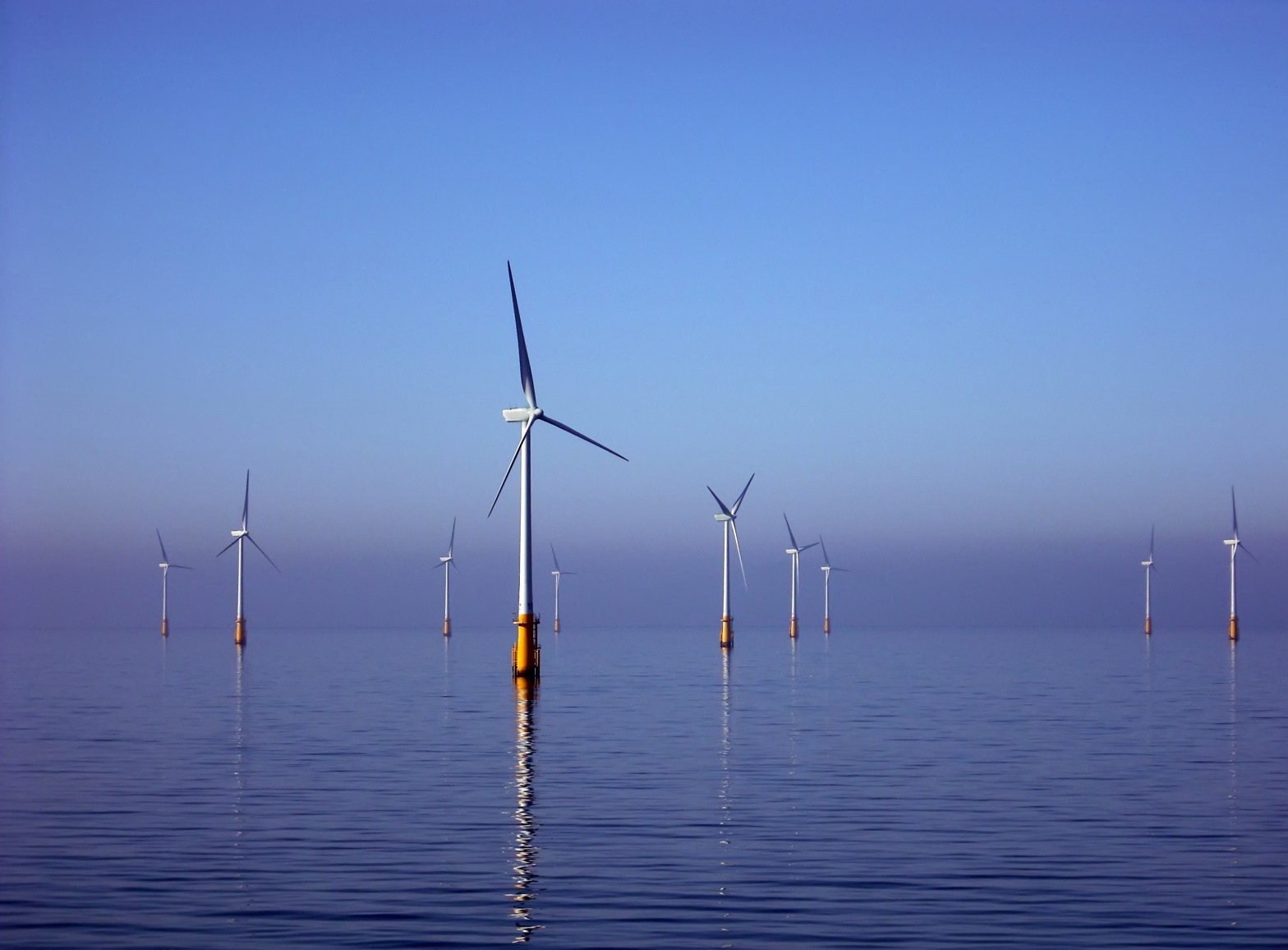
I’ve previously written about the scale and ownership model of Labour’s People’s Power Plan. In this last post on the subject, and in advance of seeing the general election manifesto for the parties I’m going to look at why the open question of revenue model matters for their plan
Currently offshore wind construction is supported by the CFD mechanism. This has been successful in driving down the costs to the taxpayer and in bringing forward investment, whilst construction and technology development risk sits squarely with the developer. Labour’s plan for the future of the CFD is unclear and there is no comment on how it will sit alongside the new ownership model.
This matters because it determines where key risks in the new scheme sit.
In the current model of the CFD, the fixing of the strike price through auctions ensures competition between developers and technology – especially with the reluctance of the current Government to use maxima and minima to carve out volumes for emerging technology. The effect of this was seen dramatically in the results for the third round CFD auction where strike prices for offshore wind were lower than those accepted in the Round 2 auction, and where Remote Island Wind came in well below the administrative strike price.
If Labour plans not to use the CFD, then not only will taxpayers’ money be exposed to market price risk but returns for minority shareholders will also become less certain. It’s hard to see how Labour will both justify taking this risk with its own money and increasing the risk for private investors, so some revenue stabilisation mechanism will be required. Watch this space.
Once prices are set through the auction, the distribution of risk is clear – construction, technology and development risk sits with the developer as their revenue is fixed by the CFD with no adjustment for delays and cost overruns; and market price risk sits with energy consumers through the difference mechanism. This division of risk means developers can manage the risks within their scope and use the certainty offered by the CFD to bring lower cost capital into the project (including using leverage). The energy market price risk is passed back to end customers via their energy supplier, in part offsetting their exposure to energy price risks (as the energy market price rises, increasing customer bills, the size of the difference payment shrinks, lowering the CFD supplier charge on their bills, and visa versa).
This model has brought forward significant investment in offshore wind, limited by the size of the budget for each allocation round.
If Labour plans to retain the CFD, the main change to this division of risk is to expose taxpayers to construction, technology and operational risk by becoming the controlling shareholder in each project. The pay-off is that the Treasury then accesses dividends over the life of the project. As I asked in Part 2, is this an appropriate use of taxpayers’ funds, and an appropriate risk for Government to take on?
There is also the question of how a Government which has a 51% stake in all bidding offshore projects might influence bidding strategies into an auction. Would they be tempted to set prices low or favour projects for non-economic reasons? How will this affect other non-Government invested technologies such as Remote Island Wind and ACT? How would this sit with State Aid and Competition rules (still required in some form post-Brexit)?
If a Labour Government doesn’t wish to retain the CFD, then market risk is transferred away from end users to taxpayers (through the 51% Government shareholding) and to the minority shareholder. This increases the risk profile for the minority shareholder and will affect the sources of capital open to them. How would renewable developers react to this, especially as they are already required to give up a majority shareholding?
Hanging over the entire question of the revenue and ownership model is whether the existing CFD could bring forward the same volume of projects without risking taxpayer’s capital? After all the last auction excluded several large projects (Moray East 2, Lewis, Viking) simply because the budget envelope was too parsimonious. Would the more simple route to securing the required 35GW of offshore capacity be to increase the budget and frequency of the existing auctions?
In summary the new ownership and revenue models behind Labour’s policies leave a lot of questions to be resolved and uncertainty for developers and owners. If we are to bring forward 35GW of offshore capacity before 2030 then these questions will need to be answered quickly if uncertainty isn’t going to make achieving these targets harder.
Of course there are even larger questions hanging over the Conservative Party’s plan for tackling climate change. Current Government policy is largely carried over from the May Government, with only a very vague single paragraph on “environment” in the Queen’s Speech.
In the next few weeks, election manifestos will be released and perhaps we’ll be able to understand each party’s approach.
 An Energy View